0%

Choosing the right Filling Machine can determine whether your production line runs smoothly or wastes time, product, and labor. The decision is rarely about speed alone. Product thickness, container shape, filling volume, cleaning requirements, and future demand all matter.

Packaging machinery specialist Kevin T. Higgins offers a useful principle: “The best machine fits the product before it fits the production target.” This idea deserves attention. A thin liquid may work well with an overflow or gravity filler. A thick cream may need piston or servo-driven technology. Foamy products require different control, especially when accuracy matters.

Look closely at your product on the factory floor. Does it drip after filling? Does it separate during storage? Does the bottle wobble under the nozzle? Small details can expose major equipment problems. A machine that performs well during a short demonstration may struggle after eight hours of continuous operation.

Your container material also influences the choice. Glass, flexible pouches, and lightweight plastic bottles behave differently. The filling speed must match your capping, labeling, and inspection equipment. Otherwise, one fast machine creates a slow bottleneck elsewhere.

Do not ignore cleaning.

Ask suppliers about changeover time, spare parts, operator training, and service response. Request a product trial using your real formula and containers. You may discover that the most expensive option is unnecessary. You may also find that the cheapest model cannot protect your quality standards.

Choosing well requires practical testing, honest production data, and room for future growth. Mistakes happen. The goal is to make them smaller, earlier, and easier to correct.
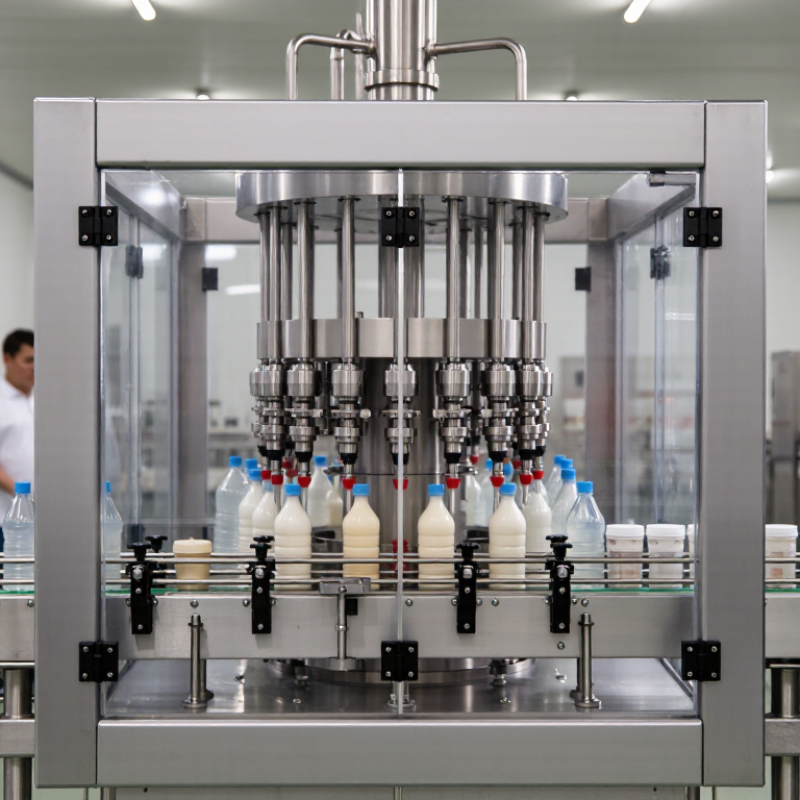
How to Choose the Right Filling Machine for Your Business?

Understanding Your Product and Filling Requirements

Choosing a filling machine starts with the product, not the advertised speed. A thin liquid behaves differently from a thick cream, powder, or liquid with suspended particles. Measure viscosity at the actual filling temperature. Test it cold. A sauce may flow easily when warm, then drag through a narrow nozzle as it cools. Note density, foaming, settling, and sensitivity to air. These details determine the pump, valve, nozzle, and hopper design.

Define the target fill volume and acceptable variation. A 500-milliliter bottle needing tight accuracy may require a different system from a flexible pouch. Record container dimensions, opening size, material, and line speed. Run representative product through a trial machine before ordering. Watch for dripping, splashing, foam, and product left inside the pipe. A clean-looking test is not enough. Measure actual fills over several hours. Small errors become expensive at scale. Do not guess.

Hygiene and maintenance also belong in the specification. Choose contact parts that can be cleaned, inspected, and replaced without excessive downtime. Ask how the machine handles changeovers between formulas and sizes. Document cleaning steps and verify them with suitable checks. I have seen teams prioritize speed, then discover their product needs gentler handling. That mistake is avoidable, although trial results can still surprise you. Leave room for uncertainty. A careful supplier should provide test data, operating limits, and training rather than broad promises.

How to Choose the Right Filling Machine for Your Business?

Understanding your product viscosity is an important first step when selecting a filling system.

Approximate dynamic viscosity values at 20°C are shown on a logarithmic scale. Low-viscosity liquids commonly work well with gravity or overflow fillers, while thicker products generally require piston, gear-pump, or other positive-displacement systems.

Comparing Filling Machine Types and Operating Principles

Choosing the right filling machine starts with the product, not the machine’s appearance. Different systems control liquid flow in different ways, and each creates practical trade-offs.

Piston fillers use a measured chamber to handle sauces, creams, and other thick products. Their strong suction supports accurate dosing, but cleaning can take longer. Peristaltic fillers squeeze flexible tubing, keeping the product away from internal pump parts. This suits sensitive liquids and small batches. However, tubing wear may gradually affect accuracy. Gravity fillers rely on liquid height and time. They work well with thin products and simple containers. Overflow fillers fill each container to the same visible level, even when internal volumes vary. That principle is useful for transparent bottles. Time-pressure fillers use compressed air to push liquid through a controlled path. They can be flexible, but pressure settings need close attention.

In production, I compare viscosity, foaming, temperature, container shape, and target speed before recommending a system. Auger fillers measure powders by screw rotation, while vibratory systems guide dry particles through controlled movement. Both require testing because powder density can change during storage. Small differences matter. Ask for sample trials using your actual product and containers. Measure fill weight, drip rate, cleaning time, and operator adjustment. A machine may appear precise during a short demonstration, yet perform differently after several hours. I have seen teams overlook this point. Calibration records, accessible contact parts, and straightforward maintenance often matter more than maximum speed. The best choice is the one your staff can operate consistently, inspect easily, and improve when real production exposes weaknesses.

Evaluating Capacity, Accuracy, and Production Speed

How to Choose the Right Filling Machine for Your Business?

Evaluating Capacity, Accuracy, and Production Speed

Capacity should match your real production schedule, not an optimistic forecast. A machine rated for 2,000 bottles per hour may slow down with frequent product changes. Viscosity, container shape, and operator breaks affect actual output. Measure hourly demand, batch sizes, and available floor space before selecting equipment. Leave room for growth, but avoid paying for capacity that remains unused.

Accuracy protects both profit and customer trust. During testing, weigh several filled containers from different production cycles. Check the average fill volume and the variation between containers. Small errors become expensive when thousands of units are processed. A suitable machine should handle your product consistently, even when temperature or viscosity changes slightly. This detail is easy to overlook.

Speed matters only when accuracy remains stable. Ask for a live trial using your containers and product, rather than relying on a specification sheet. Observe nozzle movement, drip control, changeover time, and cleaning access. Operators should complete routine adjustments without complicated tools. A faster line may create more waste if it causes splashing or frequent stoppages. I would also question unusually perfect trial results; real production is rarely so smooth. Record the trial data, including rejected containers and short pauses, before making a final decision.

Checking Compatibility, Hygiene, Automation, and Space Needs

How to Choose the Right Filling Machine for Your Business?

Compatibility comes before speed. Match the filler with your product’s viscosity, particle size, temperature, acidity, and container shape. A thin beverage may suit an overflow system, while thick sauce often needs piston or servo-driven filling. Test the actual product, not water alone. Water hides problems. Check neck dimensions, closure timing, line speed, and changeover requirements with production samples.

Hygiene needs equal attention. The World Health Organization estimates that contaminated food causes about 600 million illnesses and 420,000 deaths each year. Choose stainless-steel contact parts, tool-free disassembly, smooth welds, and drainable surfaces. Verify cleaning procedures against recognized sanitary design guidance, such as 3-A standards or EHEDG principles. Ask for cleaning validation records. A polished machine is not automatically hygienic.

Automation should solve a real bottleneck. Deloitte’s 2024 Smart Manufacturing and Operations Survey found that 86% of surveyed leaders consider smart manufacturing important for competitiveness. Still, sensors and remote monitoring add cost, training, and maintenance. Calculate payback from labor savings, reduced waste, and fewer stoppages. Measure the footprint, service clearances, utilities, and operator movement before approval. A compact filler may appear efficient, yet block access to pumps or emergency controls. I have seen layouts fail on this detail. Leave room for cleaning, repairs, and future expansion, even when floor space feels scarce.

How to Choose the Right Filling Machine for Your Business? — Checking Compatibility, Hygiene, Automation, and Space Needs
Machine Type Suitable Product Compatibility Typical Viscosity Range Common Fill-Volume Range Typical Accuracy Hygiene and Cleaning Considerations Automation Options Typical Footprint Best Suited For
Piston Filler Liquids Thick products Particulates
Suitable for sauces, creams, gels, pastes, and products containing small soft particles.
Low to very high viscosity; commonly effective from approximately 1,000 to 100,000 cP, depending on product and piston design. Approximately 5 ml to 10,000 ml per piston; larger volumes may require multiple filling cycles. Typically ±0.5% to ±1% Product-contact parts should be stainless steel or another compatible sanitary material. Select tool-less, quick-release parts and confirm whether the design supports CIP or requires manual cleaning. Manual, semi-automatic, or fully automatic. Can be integrated with conveyors, capping systems, indexing tables, and checkweighers. Approximately 0.8–2.5 m² for a compact single- or multi-head configuration. Medium- to high-viscosity products requiring accurate volumetric filling and flexible batch sizes.
Peristaltic Pump Filler Low-viscosity liquids Sensitive products Sterile applications
Suitable for beverages, chemicals, laboratory liquids, and products where the fluid should contact only the tubing.
Low to medium viscosity; commonly used below approximately 1,000 cP, with performance depending on tubing size and pump speed. Approximately 0.1 ml to 5,000 ml per fill, depending on tubing diameter and pump configuration. Typically ±0.5% to ±2% Excellent product isolation because the liquid contacts the tubing only. Disposable tubing can simplify changeover, while reusable tubing requires validated cleaning and replacement procedures. Manual and semi-automatic models are common; programmable speed, recipe storage, multiple heads, and conveyor integration are available. Approximately 0.3–1.2 m² for a benchtop or compact production unit. Small batches, high-value liquids, hygienically sensitive products, and applications requiring fast product changeover.
Time-Pressure Filler Free-flowing liquids Foaming liquids Low to medium viscosity
Suitable for water-like products, oils, detergents, and some foaming formulations when the system is correctly configured.
Low to medium viscosity; commonly below approximately 2,000 cP. Approximately 5 ml to 20,000 ml per fill, subject to tank pressure, nozzle size, and product characteristics. Typically ±0.5% to ±2% Simple product paths can be easy to drain and rinse. The tank, valves, hoses, and nozzles must be selected for the product’s chemical and temperature requirements. Available in manual, semi-automatic, and automatic versions. PLC control, pressure regulation, level sensing, and anti-drip nozzles are common options. Approximately 0.5–2.0 m², excluding product tanks or external air equipment. Businesses needing a cost-effective solution for liquid products with moderate accuracy requirements.
Gravity Filler Thin liquids Free-flowing products
Suitable for water-like liquids, cleaning solutions, and other products with consistent flow behavior.
Very low viscosity; commonly below approximately 100 cP. Approximately 50 ml to 5,000 ml per fill, depending on tank height, nozzle design, and container format. Typically ±1% to ±3% Few moving parts can simplify cleaning. Product-contact materials must resist corrosion, especially when filling acidic, alkaline, or solvent-based products. Often used as a manual or semi-automatic machine; automatic conveyor-based versions are also available for stable, free-flowing products. Approximately 0.5–1.5 m² for compact multi-nozzle equipment. Simple, low-cost filling of thin liquids where product viscosity and foaming are well controlled.
Auger Filler Powders Granules Free-flowing solids
Suitable for flour, spices, powdered chemicals, nutritional powders, and other dry products with predictable flow characteristics.
Not normally measured in cP; performance depends on bulk density, particle size, moisture, flowability, and compressibility. Approximately 1 g to 10,000 g per fill; actual range depends on auger diameter and product density. Typically ±0.5% to ±2% Use dust control, sealed product zones, and accessible auger components. For food or pharmaceutical use, product-contact surfaces and cleaning procedures should meet the applicable hygiene requirements. Manual, semi-automatic, and fully automatic systems are available, with options for dust extraction, multi-head operation, checkweighing, and container handling. Approximately 0.8–2.5 m², with additional space often required for dust extraction and powder handling. Dry-product manufacturers needing repeatable weight-based dosing and controlled powder handling.
Net-Weigh Filler Granules Coarse powders Free-flowing solids
Suitable for products such as grains, pellets, seeds, dry foods, and industrial granules.
Not normally measured in cP; best performance is obtained with products that flow consistently and do not bridge easily. Approximately 100 g to 50 kg per fill, depending on hopper capacity and load-cell configuration. Typically ±0.1% to ±0.5% Hoppers, gates, weigh buckets, and discharge chutes should be accessible for cleaning. Dust control and product segregation may be required when handling multiple materials. Usually semi-automatic or automatic. Common additions include bag clamps, conveyors, bag-sealing equipment, checkweighers, and automatic tare functions. Approximately 1.5–4.0 m², with extra clearance needed for bags, bins, and operator access. High-accuracy filling of larger quantities of dry, free-flowing products into bags, sacks, or containers.

Note: Performance ranges are typical industry guidelines rather than guaranteed specifications. Actual results depend on product temperature, viscosity, density, foaming, particle size, container shape, nozzle design, calibration, and the selected machine configuration.

Calculating Costs, Maintenance, and Long-Term Business Value

How to Choose the Right Filling Machine for Your Business?

Calculating Costs, Maintenance, and Long-Term Business Value

A filling machine should match your product, container, and daily production rhythm. Start with viscosity, fill volume, container shape, and required accuracy. A thin liquid may need different control than a thick cream. Check whether the machine handles your smallest and largest containers without frequent adjustments. A cheaper machine can become expensive when changeovers take 40 minutes each morning.

Calculate the full operating cost, not only the purchase price. Include installation, operator training, electricity, cleaning supplies, spare parts, and planned maintenance. Estimate the cost of one hour of downtime. Then compare it with the machine’s expected output. A simple spreadsheet helps, but it can still mislead. Production rarely runs at the advertised maximum speed. Leave room for delays, rejected containers, and seasonal demand.

Maintenance access strongly affects long-term value. Look for clear adjustment points, washable surfaces, accessible seals, and standard replacement parts. Ask how often nozzles, gaskets, sensors, and pumps require inspection. Keep a small spare-parts stock on site. It may prevent a full afternoon of lost production. Staff should also receive practical training, not just a manual. The wrong setting can cause underfilling, spills, and repeated cleaning. No calculation is perfect. Review actual downtime and maintenance costs after three months, then adjust your purchasing assumptions.

FAQS

What should I evaluate before choosing a filling machine?

Start with the product, not the advertised speed. Measure viscosity at its actual filling temperature. Test it cold, too. Record density, foaming, settling, and air sensitivity. These details affect the pump, valve, nozzle, and hopper.

Why does filling temperature matter?

A sauce may flow smoothly when warm. It can drag through a narrow nozzle as it cools. Temperature changes may cause dripping, slow filling, or uneven volumes. Test under realistic operating conditions.

How can I confirm filling accuracy?

Define the target volume and acceptable variation. Fill and weigh containers from several production cycles. Check the average and individual differences. A 500-milliliter bottle may need tighter control than a flexible pouch. Do not guess.

Should I test the machine before ordering?

Yes. Use your actual product and containers. Observe splashing, foam, dripping, and product left inside pipes. Run the trial for several hours. A clean first test proves very little.

How should production capacity be calculated?

Match capacity to your real schedule, not an optimistic forecast. Include product changes, operator breaks, batch sizes, and container differences. A machine rated for 2,000 bottles hourly may produce less. Leave room for growth, but avoid unused capacity.

What hygiene features deserve attention?

Choose smooth, drainable contact surfaces and accessible parts. Cleaning should not require excessive downtime. Check whether components can be inspected, removed, and replaced easily. A polished machine is not automatically hygienic.

Is automation always worth the extra cost?

Automation should solve a measurable bottleneck. Calculate savings from labor, reduced waste, and fewer stoppages. Include training, sensors, maintenance, and utility costs. More technology can create new problems. The payback may be weaker than expected.

How can I check whether the machine fits my facility?

Measure the footprint, service clearances, utilities, and operator movement. Leave access around pumps and emergency controls. Reserve space for cleaning and repairs. A compact filler may still block essential access. This detail is easy to miss.

Conclusion

Choosing the right Filling Machine begins with a clear understanding of your product and filling requirements. Consider the material’s viscosity, consistency, container type, fill volume, and production environment before comparing different machine types and operating principles. Each option offers different advantages in terms of flexibility, precision, and suitability for specific products. It is also important to evaluate filling accuracy, production speed, and overall capacity to ensure the equipment can meet both current and future demand.

In addition, check whether the machine is compatible with your containers, easy to clean, hygienic, and suitable for your workspace. The required level of automation should match your labor availability, production goals, and operational capabilities. Finally, calculate the complete investment, including purchase price, installation, maintenance, energy use, and potential upgrades. A reliable Filling Machine should not only perform well today but also provide strong long-term value, consistent quality, and efficient operation as your business grows.

Amelia

Amelia

Amelia is a dedicated marketing professional with extensive knowledge of the company’s products, services, and customer-focused solutions. With a strong understanding of market trends, user needs, and product applications, she creates clear, practical, and engaging content that helps readers make......